Buy komplizen.eu ?
We are moving the project
komplizen.eu .
Are you interested in purchasing the domain
komplizen.eu ?
domain@kv-gmbh.de · 0541-91531010
Buy komplizen.eu ?
What are your tips for the German Classico?
To enjoy the German Classico, make sure to immerse yourself in the rich history and intense rivalry between Bayern Munich and Borussia Dortmund. Learn about the key players on both teams and their playing styles to appreciate the tactical battle on the field. Additionally, try to watch the match with friends or fellow fans to enhance the experience with lively discussions and friendly banter. Lastly, don't forget to savor the passion and excitement of one of the most anticipated matches in German football. **
Can someone explain the difference between the Raufasertapete Erfurt Classico and Erfurt 52 Pro, or tell me which wallpaper is shown in this photo?
The Raufasertapete Erfurt Classico is a standard non-woven wallpaper with a smooth surface, while the Erfurt 52 Pro is a heavy-duty non-woven wallpaper with a textured surface that is more durable and suitable for high-traffic areas. In the photo, it is difficult to determine which specific wallpaper is shown without further details or a closer look at the texture. **


Similar search terms for Classico
Top-Angebote
Products related to Classico:
-
Chianti Classico Vallepicciola 2023The Chianti Classico from Vallepicciola is a Tuscan red wine whose class lies in its ability to bring to light the most typical traits of the denomination to which it belongs. The aroma of wilted violet, typical of Sangiovese, envelops a fruity and juicy nose, while on the palate flows a smooth sip, dominated by a pleasant tannic grip. A label that is born in light of the strong bond between the grape variety used and the territory, and which proposes itself as one of the most representative of the entire area. This Chianti Classico is born from the use of pure grapes of a variety that well represents the Tuscan wine potential in the world, Sangiovese. The VallePicciola winery cultivates it in vineyards located near Pievasciata and Castelnuovo Berardenga, about 400 meters above sea level. Here the terroir is characterized by a mainly calcareous and clayey subsoil. The must ferments in small steel tanks, at a controlled temperature, undergoing malolactic fermentation later, in French oak barrels. The final aging lasts for 12 months, and takes place in large barrels; at the end of this period, the wine is bottled and marketed. The Chianti Classico made by the Vallepicciola winery presents itself visually with a dense, concentrated, and deep ruby red color. Intense is the olfactory profile, which outlines a progression of fruity notes and wilted flowers, enriched by returns of aromatic herbs and sweet spices. On the palate, it is medium-bodied, elegant, equipped with a refined fresh sip, which sketches a tannin that is indeed important, but never at the expense of the overall harmony that reigns during tasting. A label that, precisely with this vintage, brings together the main critics in the sector, not only nationally.16,00 £*Shipping: 48,00 £Secure redirect to the provider
-
Amarone Classico Brigaldara 2019Amarone Classico by Brigaldara is the result of an agricultural history that begins at the dawn of the thirteenth century, when the name Brigaldara appears for the first time in some deeds to designate a sharecropping fund for the cultivation of vines, interspersed with orchards and cereals. Nevertheless, the modern history of the Brigaldara production starts in the early last century, with the total conversion of land to viticulture and the vinification of owned grapes. Today Brigaldara is a truly outstanding company in the productive landscape of Valpolicella, with approximately 50 hectares of vineyards and a beautiful fifteenth-century villa with all stables and cellars converted for the drying of the grapes and the winemaking processes. The vineyards are entirely subjected to manual treatments and any intervention in the field is focused to achieve a perfect balance between vegetation and production of plants and optimal ripening of the grapes. A very flagship product for Brigaldara is precisely Amarone Classico, made from a careful selection of grapes in the vineyard and a very strict management of grape-drying. All the grapes dedicated to the production of Amarone are selected according to the best exposure of the vineyards. The setting aside of the grapes is preceded by a very careful selection in the vineyard, aimed at eliminating the damaged clusters and those not having the ideal characteristics for a drying quality. The grapes are subjected to a drying process of about 120 days, after which the fermentation takes place, structured to facilitate the passage by the skin of all the components most important for a noble evolution of the wine. Following this rigorous process, Amarone Classico by Brigaldara binds to a traditional production, refining only in wooden barrels with a big volume, capable of refining the wine in three years of aging without altering the flavor profile.48,00 £*Shipping: 48,00 £Secure redirect to the provider
-
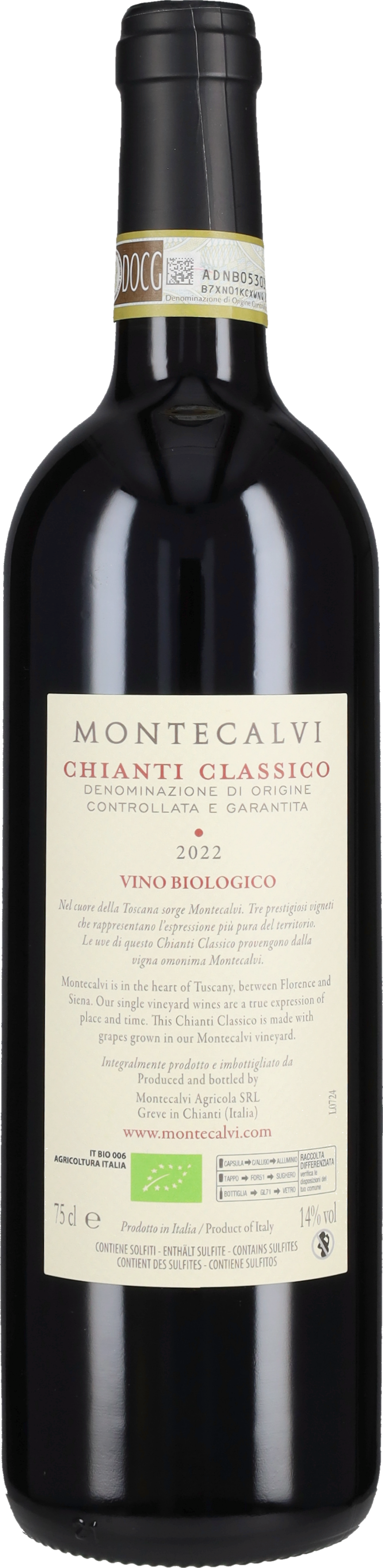
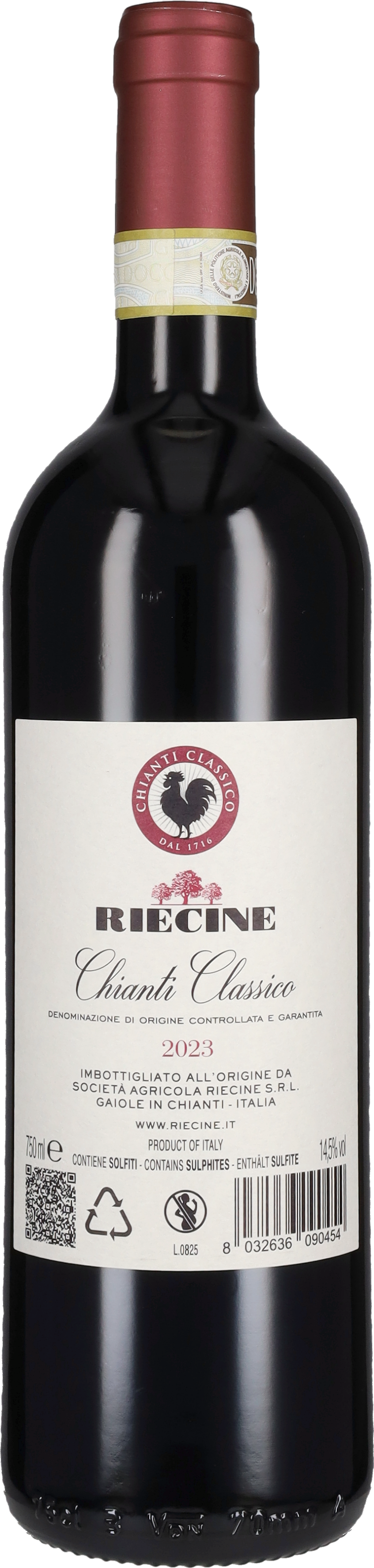
Chianti Classico Riecine 2024Chianti Classico from the Riecine estate takes the form of a typical and representative interpretation of this celebrated appellation that has strongly contributed to defining the image of oenoic Tuscany in the world. We are in Gaiole in Chianti, a subzone of Chianti Classico that, along with Radda and Castellina, is considered the most anciently devoted to viticulture. This area, included in the centre of a natural basin at the foot of the Chianti Mountains, is one of the coolest in the entire Black Rooster appellation, included among the 11 Additional Geographical Units. Riecine Chianti Classico constitutes an expression of pure Sangiovese, a black grape variety grown under a certified organic system. The vines are approximately 25-35 years old and are rooted in soils consisting mainly of limestone and clay between 450 and 500 meters above sea level. Harvesting is done by hand generally between September and October, accompanied by double selection, both in the vineyard and in the cellar. The clusters are then mellowed in unglazed concrete tanks for alcoholic fermentation, accompanied by 15 days of maceration on the skins. The ensuing ageing phase takes place in spent tonneaux and continues for one year before bottling and further brief resting in a glass. Chianti Classico Riecine has a pale ruby red color. Seductive and characteristic aromas of red fruits and violets define the olfactory landscape, along with delicate spicy tones. The sip is voluminous, broad and round, well balanced by marked freshness and a pleasantly tannic finish. Thanks to its remarkable territorial adherence, this Chianti Classico pairs beautifully with traditional Tuscan dishes such as pici with chianina ragu.25,00 £*Shipping: 48,00 £Secure redirect to the provider


-
Can someone explain the difference between the Raufasertapete Erfurt Classico and Erfurt 52 Pro to me, or tell me which wallpaper is shown in this photo?
The Raufasertapete Erfurt Classico and Erfurt 52 Pro are both textured wallpapers, but they have some differences. The Erfurt Classico is a classic embossed wallpaper with a fine relief structure, while the Erfurt 52 Pro has a deeper embossing for a more pronounced texture. In the photo, it is difficult to determine which specific wallpaper is shown without further details, but it appears to have a subtle texture, which could indicate that it is the Erfurt Classico. **
-
Who are the confidants and friends of Nancy Faeser?
Nancy Faeser has a close circle of confidants and friends, including her family members, colleagues, and long-time friends. She values the support and advice of her family, especially her husband and children. In addition, she has built strong relationships with colleagues and friends in her professional and personal life, who provide her with guidance and encouragement. These confidants and friends play an important role in Nancy Faeser's life, offering her support and companionship as she navigates her personal and professional endeavors. **
-
Who are the accomplices in an attempted trespassing?
Accomplices in an attempted trespassing are individuals who knowingly and willingly assist or encourage someone else to unlawfully enter or remain on another person's property without permission. This could include individuals who plan the trespassing, provide tools or equipment to aid in the trespassing, or act as lookouts or getaway drivers. Accomplices can be held liable for the attempted trespassing just as the person who physically attempts to trespass. **
-
Do you enjoy stalking your co-workers, friends, ex-partners, crushes, etc. on the internet?
As an AI, I do not have personal feelings or behaviors. However, it is important to respect the privacy of others and not engage in stalking behavior online. It is essential to maintain healthy boundaries and communicate openly with others rather than resorting to stalking as a means of gathering information. If you find yourself constantly checking up on someone online, it may be helpful to reflect on why you feel the need to do so and consider seeking support if necessary. **

What was the dilemma of the conspirators of July 20, 1944?
The conspirators of July 20, 1944, faced a dilemma of whether to assassinate Adolf Hitler and attempt to overthrow the Nazi regime, or to continue to support the government despite their opposition to its policies. They were torn between their loyalty to their country and their desire to end the war and prevent further atrocities. Ultimately, they chose to carry out the assassination attempt in the hope of bringing an end to the war and the Nazi regime. However, their plan failed, and many of the conspirators were executed as a result. **
Why are Nazi collaborators like Stella Goldschlag so rarely discussed?
Nazi collaborators like Stella Goldschlag are rarely discussed because their actions are seen as deeply shameful and morally reprehensible. Their collaboration with the Nazi regime involved betraying their own people and actively participating in the persecution and murder of innocent individuals. Bringing attention to their actions can be uncomfortable and disturbing, and may also serve as a painful reminder of the atrocities committed during the Holocaust. Additionally, discussing collaborators like Goldschlag may raise difficult questions about human nature, complicity, and the complexities of moral decision-making in extreme circumstances. **
Top-Angebote
Products related to Classico:
-
Spumante Metodo Classico Brut 'Milazzo Classico' Milazzosparkling wine remains to mature on the lees for at least 2 years.The Brut Metodo Classico sparkling wine "Milazzo Classico" from the Milazzo winery presents itself to the eye with a straw yellow color, characterized by some greener flashes at the rim. The perlage is fine-grained, with good persistence. Generous and subtle the bouquet that asserts itself on the nose, where citrus sensations alternate with floral notes, in which light nuances of aromatic herbs and pastry can also be perceived. On the palate, it is medium-bodied, delicate, with a fresh and slender sip marked by good sapidity. A bubble with a "Mediterranean" profile, aimed at enhancing the expressiveness of the Terre della Baronia.24,00 £*Shipping: 48,00 £Secure redirect to the provider
-
Chianti Classico Brancaia 2024The Chianti Classico is the symbolic wine of Cantina Brancaia, the one that best represents the tradition of this historic territory of Tuscany, long devoted to viticulture. A medium-bodied red, fresh and pleasant, particularly versatile at the table, appreciated for its expressive immediacy and its faithful territorial connotation. The Sangiovese grape and the lands of Chianti form, in fact, an indissoluble historical bond, deeply linking this red berry variety, typical of central Italy, with the beautiful hilly area between Florence and Siena. The Sangiovese grapes of Chianti Classico come from Tenuta Brancaia, located in the municipality of Castellina in Chianti, in the heart of the Classica area of the Denomination. The vineyards are cultivated in a magnificent hilly area at an altitude of 200/250 meters above sea level, with a south, southeast exposure. The Sangiovese plants are trained to a spurred cordon, with a density of 5,680 vines per hectare, planted in deep soils, composed equally of sand, silt, and clay. After the manual harvest, the grapes are sent for fermentation in stainless steel tanks at a controlled temperature of 28/30 °C with maceration on the skins for about 10/13 days. After the racking, the Sangiovese ages for a period of 12 months, for 2/3 in stainless steel tanks and for 1/3 in cement, in order to preserve its typicity and varietal fragrance. Before being marketed, it completes the aging with a few months in bottle. The Brancaia label was born from the desire to produce a red capable of expressing the great tradition of the territory, enhancing the authentic characteristics of a great grape like Sangiovese. The choice not to use wood for aging immediately declares the intent to preserve the qualities of a high-quality raw material. The color is a beautiful bright and luminous ruby red. The bouquet is characterized especially by the fresh fragrance of the aromas, ranging from delicate floral notes to cherry, marasca, and ripe red berry fruit, up to slight spicy nuances. The attack on the palate is lively and pleasant, with juicy fruit, fine tannins, and great drinkability. The finish is fresh and savory, with good final persistence. At the table, it pairs best with local cuisine, from first courses with meat sauces to mixed grills.17,00 £*Shipping: 48,00 £Secure redirect to the provider
-
Chianti Classico Vallepicciola 2023The Chianti Classico from Vallepicciola is a Tuscan red wine whose class lies in its ability to bring to light the most typical traits of the denomination to which it belongs. The aroma of wilted violet, typical of Sangiovese, envelops a fruity and juicy nose, while on the palate flows a smooth sip, dominated by a pleasant tannic grip. A label that is born in light of the strong bond between the grape variety used and the territory, and which proposes itself as one of the most representative of the entire area. This Chianti Classico is born from the use of pure grapes of a variety that well represents the Tuscan wine potential in the world, Sangiovese. The VallePicciola winery cultivates it in vineyards located near Pievasciata and Castelnuovo Berardenga, about 400 meters above sea level. Here the terroir is characterized by a mainly calcareous and clayey subsoil. The must ferments in small steel tanks, at a controlled temperature, undergoing malolactic fermentation later, in French oak barrels. The final aging lasts for 12 months, and takes place in large barrels; at the end of this period, the wine is bottled and marketed. The Chianti Classico made by the Vallepicciola winery presents itself visually with a dense, concentrated, and deep ruby red color. Intense is the olfactory profile, which outlines a progression of fruity notes and wilted flowers, enriched by returns of aromatic herbs and sweet spices. On the palate, it is medium-bodied, elegant, equipped with a refined fresh sip, which sketches a tannin that is indeed important, but never at the expense of the overall harmony that reigns during tasting. A label that, precisely with this vintage, brings together the main critics in the sector, not only nationally.16,00 £*Shipping: 48,00 £Secure redirect to the provider
-
What are your tips for the German Classico?
To enjoy the German Classico, make sure to immerse yourself in the rich history and intense rivalry between Bayern Munich and Borussia Dortmund. Learn about the key players on both teams and their playing styles to appreciate the tactical battle on the field. Additionally, try to watch the match with friends or fellow fans to enhance the experience with lively discussions and friendly banter. Lastly, don't forget to savor the passion and excitement of one of the most anticipated matches in German football. **
-
Can someone explain the difference between the Raufasertapete Erfurt Classico and Erfurt 52 Pro, or tell me which wallpaper is shown in this photo?
The Raufasertapete Erfurt Classico is a standard non-woven wallpaper with a smooth surface, while the Erfurt 52 Pro is a heavy-duty non-woven wallpaper with a textured surface that is more durable and suitable for high-traffic areas. In the photo, it is difficult to determine which specific wallpaper is shown without further details or a closer look at the texture. **
-
Can someone explain the difference between the Raufasertapete Erfurt Classico and Erfurt 52 Pro to me, or tell me which wallpaper is shown in this photo?
The Raufasertapete Erfurt Classico and Erfurt 52 Pro are both textured wallpapers, but they have some differences. The Erfurt Classico is a classic embossed wallpaper with a fine relief structure, while the Erfurt 52 Pro has a deeper embossing for a more pronounced texture. In the photo, it is difficult to determine which specific wallpaper is shown without further details, but it appears to have a subtle texture, which could indicate that it is the Erfurt Classico. **
-
Who are the confidants and friends of Nancy Faeser?
Nancy Faeser has a close circle of confidants and friends, including her family members, colleagues, and long-time friends. She values the support and advice of her family, especially her husband and children. In addition, she has built strong relationships with colleagues and friends in her professional and personal life, who provide her with guidance and encouragement. These confidants and friends play an important role in Nancy Faeser's life, offering her support and companionship as she navigates her personal and professional endeavors. **
Similar search terms for Classico
-
Amarone Classico Brigaldara 2019Amarone Classico by Brigaldara is the result of an agricultural history that begins at the dawn of the thirteenth century, when the name Brigaldara appears for the first time in some deeds to designate a sharecropping fund for the cultivation of vines, interspersed with orchards and cereals. Nevertheless, the modern history of the Brigaldara production starts in the early last century, with the total conversion of land to viticulture and the vinification of owned grapes. Today Brigaldara is a truly outstanding company in the productive landscape of Valpolicella, with approximately 50 hectares of vineyards and a beautiful fifteenth-century villa with all stables and cellars converted for the drying of the grapes and the winemaking processes. The vineyards are entirely subjected to manual treatments and any intervention in the field is focused to achieve a perfect balance between vegetation and production of plants and optimal ripening of the grapes. A very flagship product for Brigaldara is precisely Amarone Classico, made from a careful selection of grapes in the vineyard and a very strict management of grape-drying. All the grapes dedicated to the production of Amarone are selected according to the best exposure of the vineyards. The setting aside of the grapes is preceded by a very careful selection in the vineyard, aimed at eliminating the damaged clusters and those not having the ideal characteristics for a drying quality. The grapes are subjected to a drying process of about 120 days, after which the fermentation takes place, structured to facilitate the passage by the skin of all the components most important for a noble evolution of the wine. Following this rigorous process, Amarone Classico by Brigaldara binds to a traditional production, refining only in wooden barrels with a big volume, capable of refining the wine in three years of aging without altering the flavor profile.48,00 £*Shipping: 48,00 £Secure redirect to the provider
-
Chianti Classico Riecine 2024Chianti Classico from the Riecine estate takes the form of a typical and representative interpretation of this celebrated appellation that has strongly contributed to defining the image of oenoic Tuscany in the world. We are in Gaiole in Chianti, a subzone of Chianti Classico that, along with Radda and Castellina, is considered the most anciently devoted to viticulture. This area, included in the centre of a natural basin at the foot of the Chianti Mountains, is one of the coolest in the entire Black Rooster appellation, included among the 11 Additional Geographical Units. Riecine Chianti Classico constitutes an expression of pure Sangiovese, a black grape variety grown under a certified organic system. The vines are approximately 25-35 years old and are rooted in soils consisting mainly of limestone and clay between 450 and 500 meters above sea level. Harvesting is done by hand generally between September and October, accompanied by double selection, both in the vineyard and in the cellar. The clusters are then mellowed in unglazed concrete tanks for alcoholic fermentation, accompanied by 15 days of maceration on the skins. The ensuing ageing phase takes place in spent tonneaux and continues for one year before bottling and further brief resting in a glass. Chianti Classico Riecine has a pale ruby red color. Seductive and characteristic aromas of red fruits and violets define the olfactory landscape, along with delicate spicy tones. The sip is voluminous, broad and round, well balanced by marked freshness and a pleasantly tannic finish. Thanks to its remarkable territorial adherence, this Chianti Classico pairs beautifully with traditional Tuscan dishes such as pici with chianina ragu.25,00 £*Shipping: 48,00 £Secure redirect to the provider
-
Valpolicella Classico Viviani 2023The Valpolicella Classico by Viviani expresses the most youthful, versatile, straightforward, and fragrant character of the territory: an exceptional blend of modernity and territorial adherence. The tasting is indeed young and smooth, with a crunchy and easy-drinking sip, resulting from the processing carried out exclusively in steel of the indigenous grapes. It is a label that pairs perfectly with Mediterranean cuisine recipes, first courses, cold cuts, white meats, and even with flavorful fish dishes. It is the everyday red par excellence: simple and immediate but capable of delivering great satisfaction at the table, accompanying home cooking. This Valpolicella Classico Viviani originates from a blend of indigenous red grape varieties, where, alongside 70% Corvina Veronese, we find 30% Rondinella. The must obtained from the soft pressing of the grapes ferments spontaneously in steel containers thanks to the action of indigenous yeasts, in respect of the most authentic peasant traditions. The wine remains in steel to mature until February, and then further refines for two months directly in glass, after bottling. The Viviani Valpolicella Classico develops in the glass with a typically ruby color, crossed by light violet veins, evident at the rim. The nose is filled with fine and subtle aromas, announced with elegant fruity and spicy touches, enriched also by nuances of aromatic herbs. On the palate, it is easy-drinking, with a tasty and satisfying sip, relying on a tannic structure finely integrated into the overall structure. A Veneto red that, with this vintage, satisfies the main critics in the sector, not just Italian: considering the advantageous price, not tasting it would be a shame.9,00 £*Shipping: 48,00 £Secure redirect to the provider
-
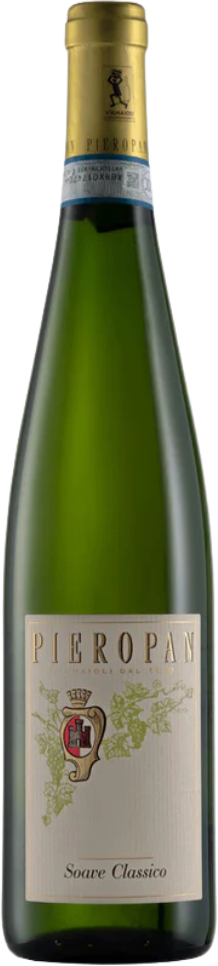
Soave Classico Pieropan 2025From a skillful blend of Garganega and Trebbiano di Soave comes the Soave Classico, a fresh and young wine produced by the Pieropan winery, a historical reality of the area. It was in 1890 that Leonildo Pieropan, a doctor from the town of Soave, decided to start experimenting with wine production, beginning with the family-owned vineyards. A journey made of hard work and passion, which today sees Leonildo, the grandson of the founder, as the figure who has managed to make Pieropan a modern and technological winery; a cutting-edge structure, where the ancient peasant traditions are never forgotten, but rather always represent the foundation from which to create authentic labels, just like this Soave. The Soave Classico is a white DOC wine that the Pieropan winery produces by adding 10% of Trebbiano di Soave to 90% of Garganega. Two traditional grape varieties of the area, which grow in volcanic origin vineyards at an altitude ranging from 100 to 300 meters above sea level. The grapes, carefully selected, ferment at a temperature controlled at 16 degrees in vitrified concrete tanks, where they remain to refine on the fine lees until the following spring, when bottling is scheduled. This Pieropan Soave Classico presents itself to the eye with a straw-yellow color, crossed by light greenish reflections. The aromas that envelop the nose are pronounced, and are structured on well-defined floral notes. On the palate, it is slender-bodied, light, with a fully satisfying sip that presents excellent sapidity; it ends with a finish characterized by a slight almond aftertaste. It is a bottle with which the Pieropan winery expresses the youngest and most dynamic traits of one of the most important DOCs in all of Veneto.14,00 £*Shipping: 48,00 £Secure redirect to the provider
-
Who are the accomplices in an attempted trespassing?
Accomplices in an attempted trespassing are individuals who knowingly and willingly assist or encourage someone else to unlawfully enter or remain on another person's property without permission. This could include individuals who plan the trespassing, provide tools or equipment to aid in the trespassing, or act as lookouts or getaway drivers. Accomplices can be held liable for the attempted trespassing just as the person who physically attempts to trespass. **
-
Do you enjoy stalking your co-workers, friends, ex-partners, crushes, etc. on the internet?
As an AI, I do not have personal feelings or behaviors. However, it is important to respect the privacy of others and not engage in stalking behavior online. It is essential to maintain healthy boundaries and communicate openly with others rather than resorting to stalking as a means of gathering information. If you find yourself constantly checking up on someone online, it may be helpful to reflect on why you feel the need to do so and consider seeking support if necessary. **
-
What was the dilemma of the conspirators of July 20, 1944?
The conspirators of July 20, 1944, faced a dilemma of whether to assassinate Adolf Hitler and attempt to overthrow the Nazi regime, or to continue to support the government despite their opposition to its policies. They were torn between their loyalty to their country and their desire to end the war and prevent further atrocities. Ultimately, they chose to carry out the assassination attempt in the hope of bringing an end to the war and the Nazi regime. However, their plan failed, and many of the conspirators were executed as a result. **
-
Why are Nazi collaborators like Stella Goldschlag so rarely discussed?
Nazi collaborators like Stella Goldschlag are rarely discussed because their actions are seen as deeply shameful and morally reprehensible. Their collaboration with the Nazi regime involved betraying their own people and actively participating in the persecution and murder of innocent individuals. Bringing attention to their actions can be uncomfortable and disturbing, and may also serve as a painful reminder of the atrocities committed during the Holocaust. Additionally, discussing collaborators like Goldschlag may raise difficult questions about human nature, complicity, and the complexities of moral decision-making in extreme circumstances. **
* All prices are inclusive of VAT and, if applicable, plus shipping costs. The offer information is based on the details provided by the respective shop and is updated through automated processes. Real-time updates do not occur, so deviations can occur in individual cases. ** Note: Parts of this content were created by AI.