Buy komplizen.eu ?
We are moving the project
komplizen.eu .
Are you interested in purchasing the domain
komplizen.eu ?
domain@kv-gmbh.de · 0541-91531010
Buy komplizen.eu ?
How do I calculate refraction or the angle of refraction?
To calculate refraction or the angle of refraction, you can use Snell's Law, which relates the angles of incidence and refraction to the refractive indices of the two mediums involved. The formula is n1*sin(theta1) = n2*sin(theta2), where n1 and n2 are the refractive indices of the two mediums, and theta1 and theta2 are the angles of incidence and refraction, respectively. By rearranging this formula, you can solve for the angle of refraction when given the angle of incidence and refractive indices of the mediums. **
How do I calculate the refraction or the angle of refraction?
To calculate the angle of refraction, you can use Snell's Law, which states that the ratio of the sine of the angle of incidence to the sine of the angle of refraction is equal to the ratio of the velocities of light in the two different mediums. Mathematically, this can be expressed as n1*sin(theta1) = n2*sin(theta2), where n1 and n2 are the refractive indices of the two mediums, and theta1 and theta2 are the angles of incidence and refraction, respectively. By rearranging this equation, you can solve for the angle of refraction. **
Similar search terms for Refraction
Top-Angebote
Products related to Refraction:
-
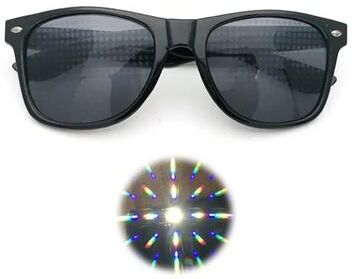
Quick Pick Pro Prism Effect Diffraction Glasses For Raves & Festivals Black Frame Rave Glasses With Light Refraction Lenses Prism Effect Diffraction Glasses For Raves & Festivals Black Frame Rave Glasses With Light Refraction LensesStep into a world where light becomes a living celebration. These Prism Effect diffraction glasses turn every laser, LED and stage light into vibrant, kaleidoscopic visuals that pull you deeper into the moment. Designed for music lovers, festival...41,97 $*Shipping: 0,00 $Secure redirect to the provider
-
Coach House Partners Spitfire Metal Construction SetCelebrate one of Britain’s most iconic aircraft with the Coach House Partners Spitfire Metal Construction Set. Designed as a detailed, hands‑on build, this model pays tribute to the legendary Spitfire, a symbol of British engineering and aviation history. With 285 precision metal components, this construction set offers a rewarding build that balances challenge with clarity. Clear, colour step‑by‑step instructions guide you through the process, while the included specialist tools ensure everything you need is close at hand. Once complete, the finished model makes an impressive display piece, showcasing the distinctive shape and presence of the original aircraft. Ideal for teenagers and adults alike, this set encourages patience, problem‑solving and practical engineering skills. Expect a build time of around three to five hours, making it a satisfying project rather than a quick assembly. Finished model dimensions: 11(H) x 40(W) x 35(D) cm. Recommended age: 12+ (parental guidance advised).24,99 £*Shipping: 3,50 £Secure redirect to the provider
-
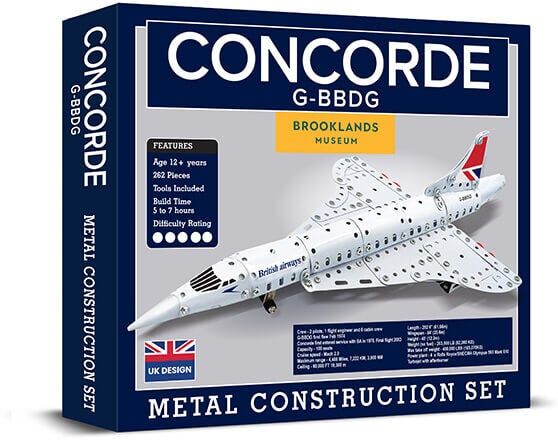
Coach House Partners Concorde Metal Construction SetRecreate one of the most extraordinary achievements in aviation history with the Coach House Partners Concorde Metal Construction Set. Developed in association with Brooklands Museum, Weybridge, this detailed model represents British Airways Concorde G‑BBDG, which took its maiden flight in February 1974. Concorde was a British‑French turbojet aircraft capable of flying at over twice the speed of sound, transforming long‑distance travel by cutting transatlantic flight times to just a few hours. This construction set captures the sleek proportions and distinctive design that made Concorde an enduring symbol of innovation and luxury air travel. Comprising 269 precision‑engineered stainless‑steel pieces, the set offers a challenging and rewarding build for those who enjoy detailed modelling projects. Clear, colour step‑by‑step instructions guide the process, while the included specialist tools ensure everything needed is ready to use. With an estimated build time of five to seven hours, this is a satisfying project that results in an impressive display model. Designed for teenagers and adults, the set also supports the development of fine motor skills, patience and basic mechanical understanding. Parental guidance is recommended. Finished model dimensions: 14(H) x 24(W) x 52(D) cm. Recommended age: 12+.24,99 £*Shipping: 3,50 £Secure redirect to the provider
-
Coach House Partners Tractor Metal Construction SetRecreate a familiar sight from rural life with the Coach House Partners Tractor Metal Construction Set. This detailed model celebrates the enduring role of the tractor in farming and agriculture, capturing the practical design and robust character of this essential working vehicle. The set includes 295 precision‑engineered stainless‑steel pieces, with the main body finished in a traditional green colour for an authentic appearance. Clear, colour step‑by‑step instructions guide you through the build, while the included specialist tools ensure everything needed is ready to use from the outset. Once completed, the model makes a compact and characterful display piece. With an estimated build time of two to four hours, this construction set offers a satisfying hands‑on project for teenagers and adults who enjoy detailed modelling. It also supports fine motor skills, patience and basic mechanical understanding. Parental guidance is recommended. Finished model dimensions: 12(H) x 12.8(W) x 29(D) cm. Recommended age: 12+.24,99 £*Shipping: 3,50 £Secure redirect to the provider


-
What is the angle of refraction in the refraction of light?
The angle of refraction in the refraction of light is the angle between the refracted ray and the normal to the surface at the point of incidence. It is determined by Snell's Law, which states that the ratio of the sine of the angle of incidence to the sine of the angle of refraction is equal to the ratio of the velocities of light in the two media. The angle of refraction can be calculated using the formula: n1*sin(θ1) = n2*sin(θ2), where n1 and n2 are the refractive indices of the two media, and θ1 and θ2 are the angles of incidence and refraction, respectively. **
-
What is refraction in a prism?
Refraction in a prism is the bending of light as it passes through the prism due to the change in speed of light in different mediums. When light enters a prism, it slows down and bends towards the normal line, then as it exits the prism, it speeds up and bends away from the normal line. This bending of light causes the different colors of the spectrum to separate and create a rainbow effect. **
-
What is the law of refraction?
The law of refraction, also known as Snell's law, describes the relationship between the angles of incidence and refraction when a wave, such as light or sound, passes from one medium to another. It states that the ratio of the sine of the angle of incidence to the sine of the angle of refraction is equal to the ratio of the velocities of the wave in the two media. In other words, the law of refraction quantifies how much a wave bends as it passes from one medium to another, such as from air to water or from air to glass. **
-
How does the refraction of light occur?
Refraction of light occurs when light travels from one medium to another with a different optical density, causing the light rays to change direction. This change in direction is due to the difference in speed of light in the two mediums. As light enters a medium with a different optical density, it can either speed up or slow down, causing the light rays to bend. This bending of light is what we observe as refraction. **
How can one construct refraction of light?
One can construct refraction of light by passing light through a medium with a different optical density, such as air to water or glass. The change in optical density causes the light to change speed and bend as it enters the new medium, resulting in refraction. The angle of refraction can be calculated using Snell's Law, which relates the angles of incidence and refraction to the refractive indices of the two mediums. By understanding and manipulating these principles, one can effectively construct and demonstrate refraction of light. **
What is the lens equation for refraction?
The lens equation for refraction is given by: 1/f = (n2 - n1) * (1/R1 - 1/R2) Where: - f is the focal length of the lens - n1 and n2 are the refractive indices of the two media on either side of the lens - R1 and R2 are the radii of curvature of the two surfaces of the lens This equation relates the focal length of a lens to the refractive indices and radii of curvature, and is used to calculate the behavior of light as it passes through a lens. **
Top-Angebote
Products related to Refraction:
-
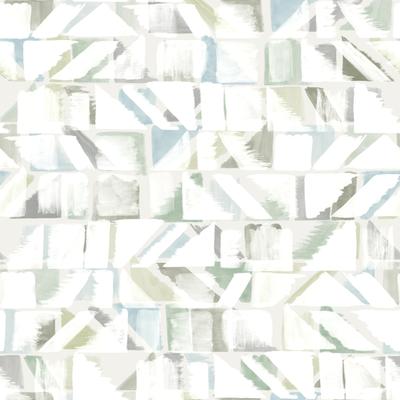
York Wallcoverings Blue Refraction Peel and Stick WallpaperPattern Refraction is a fractured geometric with the effect of a broken prism of reflected light. This Refraction Peel & Stick Wallpaper measures approximately 20.5 inches wide by 20 feet long, covering About 34.2 square feet per roll.47,07 $*Shipping: 0,00 $Secure redirect to the provider
-
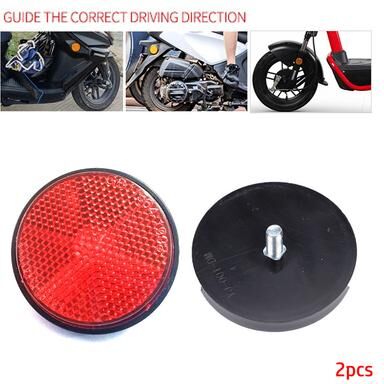
Smart Shopping Spot Motorcycle Night Reflector, Circular Reflector For Cars, Trucks, Refraction Light redIlluminate Your Ride with the Circular Reflector Ensure safety and visibility during night rides with the Circular Reflector for Cars, Trucks, and Motorcycles. This easytoinstall reflector light ensures you're seen, whether driving a car, truck, or...22,97 $*Shipping: 0,00 $Secure redirect to the provider
-
Quick Pick Pro Prism Effect Diffraction Glasses For Raves & Festivals Black Frame Rave Glasses With Light Refraction Lenses Prism Effect Diffraction Glasses For Raves & Festivals Black Frame Rave Glasses With Light Refraction LensesStep into a world where light becomes a living celebration. These Prism Effect diffraction glasses turn every laser, LED and stage light into vibrant, kaleidoscopic visuals that pull you deeper into the moment. Designed for music lovers, festival...41,97 $*Shipping: 0,00 $Secure redirect to the provider
-
Coach House Partners Spitfire Metal Construction SetCelebrate one of Britain’s most iconic aircraft with the Coach House Partners Spitfire Metal Construction Set. Designed as a detailed, hands‑on build, this model pays tribute to the legendary Spitfire, a symbol of British engineering and aviation history. With 285 precision metal components, this construction set offers a rewarding build that balances challenge with clarity. Clear, colour step‑by‑step instructions guide you through the process, while the included specialist tools ensure everything you need is close at hand. Once complete, the finished model makes an impressive display piece, showcasing the distinctive shape and presence of the original aircraft. Ideal for teenagers and adults alike, this set encourages patience, problem‑solving and practical engineering skills. Expect a build time of around three to five hours, making it a satisfying project rather than a quick assembly. Finished model dimensions: 11(H) x 40(W) x 35(D) cm. Recommended age: 12+ (parental guidance advised).24,99 £*Shipping: 3,50 £Secure redirect to the provider
-
How do I calculate refraction or the angle of refraction?
To calculate refraction or the angle of refraction, you can use Snell's Law, which relates the angles of incidence and refraction to the refractive indices of the two mediums involved. The formula is n1*sin(theta1) = n2*sin(theta2), where n1 and n2 are the refractive indices of the two mediums, and theta1 and theta2 are the angles of incidence and refraction, respectively. By rearranging this formula, you can solve for the angle of refraction when given the angle of incidence and refractive indices of the mediums. **
-
How do I calculate the refraction or the angle of refraction?
To calculate the angle of refraction, you can use Snell's Law, which states that the ratio of the sine of the angle of incidence to the sine of the angle of refraction is equal to the ratio of the velocities of light in the two different mediums. Mathematically, this can be expressed as n1*sin(theta1) = n2*sin(theta2), where n1 and n2 are the refractive indices of the two mediums, and theta1 and theta2 are the angles of incidence and refraction, respectively. By rearranging this equation, you can solve for the angle of refraction. **
-
What is the angle of refraction in the refraction of light?
The angle of refraction in the refraction of light is the angle between the refracted ray and the normal to the surface at the point of incidence. It is determined by Snell's Law, which states that the ratio of the sine of the angle of incidence to the sine of the angle of refraction is equal to the ratio of the velocities of light in the two media. The angle of refraction can be calculated using the formula: n1*sin(θ1) = n2*sin(θ2), where n1 and n2 are the refractive indices of the two media, and θ1 and θ2 are the angles of incidence and refraction, respectively. **
-
What is refraction in a prism?
Refraction in a prism is the bending of light as it passes through the prism due to the change in speed of light in different mediums. When light enters a prism, it slows down and bends towards the normal line, then as it exits the prism, it speeds up and bends away from the normal line. This bending of light causes the different colors of the spectrum to separate and create a rainbow effect. **
Similar search terms for Refraction
-
Coach House Partners Concorde Metal Construction SetRecreate one of the most extraordinary achievements in aviation history with the Coach House Partners Concorde Metal Construction Set. Developed in association with Brooklands Museum, Weybridge, this detailed model represents British Airways Concorde G‑BBDG, which took its maiden flight in February 1974. Concorde was a British‑French turbojet aircraft capable of flying at over twice the speed of sound, transforming long‑distance travel by cutting transatlantic flight times to just a few hours. This construction set captures the sleek proportions and distinctive design that made Concorde an enduring symbol of innovation and luxury air travel. Comprising 269 precision‑engineered stainless‑steel pieces, the set offers a challenging and rewarding build for those who enjoy detailed modelling projects. Clear, colour step‑by‑step instructions guide the process, while the included specialist tools ensure everything needed is ready to use. With an estimated build time of five to seven hours, this is a satisfying project that results in an impressive display model. Designed for teenagers and adults, the set also supports the development of fine motor skills, patience and basic mechanical understanding. Parental guidance is recommended. Finished model dimensions: 14(H) x 24(W) x 52(D) cm. Recommended age: 12+.24,99 £*Shipping: 3,50 £Secure redirect to the provider
-
Coach House Partners Tractor Metal Construction SetRecreate a familiar sight from rural life with the Coach House Partners Tractor Metal Construction Set. This detailed model celebrates the enduring role of the tractor in farming and agriculture, capturing the practical design and robust character of this essential working vehicle. The set includes 295 precision‑engineered stainless‑steel pieces, with the main body finished in a traditional green colour for an authentic appearance. Clear, colour step‑by‑step instructions guide you through the build, while the included specialist tools ensure everything needed is ready to use from the outset. Once completed, the model makes a compact and characterful display piece. With an estimated build time of two to four hours, this construction set offers a satisfying hands‑on project for teenagers and adults who enjoy detailed modelling. It also supports fine motor skills, patience and basic mechanical understanding. Parental guidance is recommended. Finished model dimensions: 12(H) x 12.8(W) x 29(D) cm. Recommended age: 12+.24,99 £*Shipping: 3,50 £Secure redirect to the provider
-
York Wallcoverings Neutral Refraction Peel and Stick WallpaperPattern Refraction is a fractured geometric with the effect of a broken prism of reflected light. This Refraction Peel & Stick Wallpaper measures approximately 20.5 inches wide by 20 feet long, covering About 34.2 square feet per roll.55,25 $*Shipping: 0,00 $Secure redirect to the provider
-
York Wallcoverings Brown and Beige Refraction Peel and Stick WallpaperPattern Refraction is a fractured geometric with the effect of a broken prism of reflected light. This Refraction Peel & Stick Wallpaper measures approximately 20.5 inches wide by 20 feet long, covering About 34.2 square feet per roll.40,80 $*Shipping: 0,00 $Secure redirect to the provider
-
What is the law of refraction?
The law of refraction, also known as Snell's law, describes the relationship between the angles of incidence and refraction when a wave, such as light or sound, passes from one medium to another. It states that the ratio of the sine of the angle of incidence to the sine of the angle of refraction is equal to the ratio of the velocities of the wave in the two media. In other words, the law of refraction quantifies how much a wave bends as it passes from one medium to another, such as from air to water or from air to glass. **
-
How does the refraction of light occur?
Refraction of light occurs when light travels from one medium to another with a different optical density, causing the light rays to change direction. This change in direction is due to the difference in speed of light in the two mediums. As light enters a medium with a different optical density, it can either speed up or slow down, causing the light rays to bend. This bending of light is what we observe as refraction. **
-
How can one construct refraction of light?
One can construct refraction of light by passing light through a medium with a different optical density, such as air to water or glass. The change in optical density causes the light to change speed and bend as it enters the new medium, resulting in refraction. The angle of refraction can be calculated using Snell's Law, which relates the angles of incidence and refraction to the refractive indices of the two mediums. By understanding and manipulating these principles, one can effectively construct and demonstrate refraction of light. **
-
What is the lens equation for refraction?
The lens equation for refraction is given by: 1/f = (n2 - n1) * (1/R1 - 1/R2) Where: - f is the focal length of the lens - n1 and n2 are the refractive indices of the two media on either side of the lens - R1 and R2 are the radii of curvature of the two surfaces of the lens This equation relates the focal length of a lens to the refractive indices and radii of curvature, and is used to calculate the behavior of light as it passes through a lens. **
* All prices are inclusive of VAT and, if applicable, plus shipping costs. The offer information is based on the details provided by the respective shop and is updated through automated processes. Real-time updates do not occur, so deviations can occur in individual cases. ** Note: Parts of this content were created by AI.